Author: sivartkram

  • The Trembling at the Threshold: Why the Obstacle Is the Way

    Every seeker, whether they swing a rock hammer or carry a prayer, eventually finds themselves standing before a threshold—the kind that makes the heart hesitate and the mind scramble for footing. It’s the moment when the familiar gives way to something larger, older, deeper. And it’s there, in that quiet tremor, that three voices from three very different ages speak in harmony.

    Bahá’u’lláh writes in the Hidden Words:

    “O children of the divine and invisible essence! Ye shall be hindered from loving Me… minds cannot grasp Me nor hearts contain Me.”

    Not as a warning.
    Not as a scolding.
    But as a gentle acknowledgment of the human condition:
    we tremble at the presence of the Infinite.

    Marcus Aurelius, with his blunt Roman clarity, put it another way:

    “What stands in the way becomes the way.”
    (Or in its modern phrasing: “the obstacle is the way.”)

    Resistance is not a sign to retreat—it is evidence that we’ve reached meaningful terrain.

    And then there’s Oriah Mountain Dreamer, calling from the raw, human center of things. In The Invitation, she slices through every superficial layer and asks the single question that matters:

    Can you sit with the ache without fleeing?
    Can you stay present at the edge of your own fear?

    Different languages.
    Different centuries.
    Different traditions.
    Yet they point to the same spiritual topography.

    We are not hindered from the divine because we are unworthy.
    We are hindered because to stand before the Unknowable is to feel the fault lines within ourselves shift.

    That trembling is natural.
    It is ancient.
    It is sacred.

    And perhaps most importantly: it is an invitation.


    The Fear Isn’t a Sign of Distance — It’s a Sign of Proximity

    Many people recoil from the word “God,” not because the syllables are flawed, but because the concept feels like standing at the edge of a canyon whose far wall is lost in the morning haze. There’s weight there. Mystery. Depth. Responsibility.

    You could swap out the term—call it the Universe, the Divine, the Source, the Infinite—but the human soul would still quiver when it approaches something vast. The resistance isn’t linguistic; it’s existential.

    We hesitate in the presence of something that promises to remake us.

    And that is precisely what Bahá’u’lláh names:
    You will be hindered—because your very finiteness recoils at infinity. That recoil is not sin. It is simply truth.

    Marcus Aurelius echoes it through the Stoic lens:
    What blocks you becomes your teacher.

    Oriah extends the same insight into relationship:
    Show me you can remain open in the face of discomfort. That’s where real life begins.

    These aren’t contradictions.
    They’re harmonies.


    A Geological Parallel: Where the Earth Breaks, the Veins Form

    As a geologist, I see this pattern play out in the crust of the Earth itself.

    The richest mineralization often forms along fractures.
    The most meaningful structures occur where rock gave way.
    The story is written in the breaks, not the unbroken slabs.

    Pressure + heat + time = transformation.
    Always.

    Human souls aren’t all that different.

    Where we meet resistance—fear, doubt, hesitation—that’s where the vein runs. That’s where the treasure lies buried. The obstacle isn’t an impediment. It’s a compass needle pointing toward the work that matters.

    Bahá’u’lláh, Marcus, Oriah—each is describing the same metamorphic process.


    Why This Matters Today

    We live in a secular, scientific age that prizes measurement and control. As a scientist myself, I treasure those tools. They illuminate the physical world with astonishing clarity.

    But they cannot fully speak to the subterranean dimensions of the human spirit.

    When people bristle at “God,” it’s not science speaking—it’s vulnerability. To approach the Infinite is to admit that not everything fits into an equation, that mystery still pulses through the universe, that meaning is not always quantifiable.

    It’s easier to stay on the surface.
    It’s safer there.
    But no mineral worth finding ever sits on the surface for long.


    The Real Work: Helping Others Cross Their Threshold

    If you want to help others see what you’ve seen—to feel what cracked open your own heart—don’t focus on finding a “better word.” Focus on creating space for the trembling.

    Speak not from doctrines but from transformation.
    Share not certainties but wonder.
    Offer not explanations but companionship at the edge of the unknown.

    Because here’s the hidden truth:

    The fear people feel around the Divine is not a flaw—it is proof they are standing at the doorway.

    And the trembling is not a warning to retreat.
    It is the ancient signal that they are finally, beautifully, achingly close.

    The obstacle is the way.
    The doubt is the invitation.
    And the trembling is the threshold of awakening.

  • 🜃 “Live Then the Days of Thy Life”: A Reflection on Purity, Practice, and Purpose in the Field


    > The Hidden Words of Bahá’u’lláh – Part Two: From the Persian – Number 44

    O Companion of My Throne!
    Hear no evil, and see no evil, abase not thyself, neither sigh and weep.
    Speak no evil, that thou mayest not hear it spoken unto thee,
    and magnify not the faults of others that thine own faults may not appear great;
    and wish not the abasement of anyone, that thine own abasement be not exposed.
    Live then the days of thy life, that are less than a fleeting moment,
    with thy mind stainless, thy heart unsullied, thy thoughts pure, and thy nature sanctified,
    so that, free and content, thou mayest put away this mortal frame,
    and repair unto the mystic paradise and abide in the eternal kingdom forevermore.

    – Bahá’u’lláh


    There’s a weight to these words—something crystalline and layered, like a perfect cross-section through the sediment of human behavior.

    And for those of us who read both scripture and stratigraphy, Bahá’u’lláh’s message here rings like a hammer on good outcrop: precise, deliberate, and resonant.

    There is, tucked into this passage, a spiritual field manual. One that—whether by fortune or Providence—speaks directly to the life of the field geologist, the explorer, the mapper of uncertain lands. It is not doctrine in the institutional sense, but it is guidance. And perhaps, it’s what we most need as we move through this era of deep uncertainty—where values, policies, and ecosystems alike feel under constant redefinition.

    Let’s read it again—only this time, layered with dust, ethics, and a bit of wanderlust.


    “Hear no evil, and see no evil…”

    In the literal wilds where we work, evil doesn’t often wear a cape. It’s rarely cartoonish or obvious. It comes instead as cynicism creeping into our thoughts. As distrust baked into meetings before they even start. As the temptation to see others not as stewards, but as obstacles.

    To hear no evil isn’t about naivety. It’s about guarding the inner ear from corrosive frequencies. Not turning away from hard truths, but resisting the temptation to marinate in bitterness. If your hearing is tuned for complaint, you’ll miss the quiet hum of progress.

    And to see no evil is a call to remember that our field of vision—literally and figuratively—can either focus on the flaws in people, or on the beauty and potential of what might emerge. We can choose to see landowners as partners, regulators as collaborators, even when history tells us to brace for battle.

    Sometimes we find what we’re willing to look for.


    “…abase not thyself, neither sigh and weep.”

    Every geologist has had the day where the trucks won’t start, the waterline’s frozen, the drill steel is late, and the gamma log comes up flat.

    But Bahá’u’lláh reminds us: you don’t have to bow down to despair. You don’t have to weep your way through hardship. Stand upright. Even in failure, even in “duster” holes, there’s dignity in the work.

    This line is less about denying grief than it is about resisting collapse. In the long story of exploration, every disappointment is a footnote, not the whole book. Our time here is too short to waste on self-inflicted erosion.


    “Speak no evil, that thou mayest not hear it spoken unto thee…”

    We work in a word-heavy world. Proposals. Calls. Emails. Public hearings. Investor decks.

    And every word we release is a kind of seismic wave—it goes out and reverberates. When we speak poorly of others, that energy finds its way back. When we diminish, gossip, or belittle, we become tuned to the same frequency, and soon enough, we hear it spoken of us.

    But when we speak with clarity, fairness, even generosity—especially toward those with whom we disagree—we tune ourselves to something more enduring.

    There’s a dignity in restraint. And in an industry where egos often roar louder than compressors, restraint is a rare and powerful resource.


    “…and magnify not the faults of others that thine own faults may not appear great;”

    We know how easy it is to trace faults—both geologic and human. But focusing the lens too tightly on another’s shortcomings is often a clever dodge from mapping our own.

    In exploration, magnification is a tool: we use it to study thin sections, to understand structure, to reveal clarity. But when turned toward others, it can become distortion. The more we zoom in on their missteps, the easier it becomes to overlook the fractures running through our own plans, teams, or ethics.

    There’s wisdom in keeping that lens calibrated.


    “…and wish not the abasement of anyone, that thine own abasement be not exposed.”

    It’s tempting—especially in the competitive chaos of critical mineral land rushes and permit queues—to quietly wish for someone else to stumble. A denied permit. A failed fundraise. A regulatory snag.

    But to wish abasement is to create a fissure in your own foundation. It invites reactivity, pettiness, and scarcity where abundance and purpose might otherwise guide your course.

    The Earth doesn’t reward spite. It responds to presence, patience, and persistence. Wishing someone else down doesn’t raise you up—it only digs both your graves a little deeper.


    “Live then the days of thy life, that are less than a fleeting moment…”

    This—this is the hinge upon which the rest swings. The poetic turning point.

    Whatever claims we stake, whatever legacy we build, our time in the field—and on this Earth—is less than a fleeting moment. We are vapor on the mirror of geologic time.

    And yet, we are asked to live with intention. With presence. To live, not just endure, or profit, or perform. To dwell in our moments as if they were sacred because… they are.

    What a gift that geology teaches us this, too. To cherish every field day, every outcrop, every moment where the wind shifts and the light hits the orebody just right. It’s not always glorious—but it is always real.


    “…with thy mind stainless, thy heart unsullied, thy thoughts pure, and thy nature sanctified…”

    Let the drill rods turn. Let the maps evolve. Let the science be bold.

    But let the inner compass stay clean.

    A stainless mind doesn’t mean sterile—it means honest. A pure thought doesn’t mean naïve—it means intentional. And a sanctified nature doesn’t mean sanctimonious—it means showing up each day with the quiet understanding that this work matters. That how we do it matters even more.

    To live like this—stainless, unsullied, sanctified—isn’t easy. But it’s the kind of legacy you can’t assay or log. And it’s the only one that will echo past the mine life.


    “…so that, free and content, thou mayest put away this mortal frame, and repair unto the mystic paradise and abide in the eternal kingdom forevermore.”

    What is the mystic paradise?

    Maybe it’s the state of soul when your work aligns with your worth. When your decisions bear the weight of conscience and your days, however fleeting, leave behind a landscape slightly more honest for your having walked it.

    Maybe paradise is here—not in the afterlife—but in the after-work. In the peace that comes from knowing you stood upright, worked clean, and left no evil spoken, seen, or scattered behind you.


    🜂 Final Thought:

    In exploration, it’s easy to focus on what’s below. But Bahá’u’lláh’s words remind us to look within. To survey our own conduct with the same rigor we apply to soil grids and gamma logs.

    The Earth will continue to turn. Markets will rise and fall. But your days—those fleeting moments you’re gifted—are your one true claim.

    So: live them.

    With clarity. With kindness. With a clean mind and sanctified nature.

    The drill is turning. Let your heart stay true.

  • Ladders of Stone and Light: Where Geology Meets the Sublime

    Knowledge is as wings to man’s life, and a ladder for his ascent… a source of glory, of bounty, of joy, of exaltation, of cheer and gladness unto him.”
    — Bahá’u’lláh, Tablets of Bahá’u’lláh, Tajallíyát


    In the dry heat of the field, standing amidst outcrops that whisper of eons past, I often find myself lost in a silent reverie—not just of fault lines and formations, but of something far more subtle. Something sacred.

    There is a reverence in geology. Not the kind that recites rites, but one that bows its head before deep time, the choreography of atoms, and the hidden logic of creation. To read the Earth is to trace the fingerprints of the Divine across basalt, breccia, and banded iron.

    Stone Tablets and Sacred Texts

    In the Tablets of Bahá’u’lláh, the Manifestation of God writes that “knowledge is as wings to man’s life, and a ladder for his ascent.” As geologists, we climb such ladders. Each stratigraphic column we read is a rung toward understanding—of not only Earth’s form but our own formation.

    Bahá’u’lláh cautions us to pursue sciences that “can profit the peoples of the earth”—a sober reminder in an age of data deluge and echo chambers. In geology, this charge is vividly practical: mapping groundwater for villages, identifying minerals for renewable energy, or understanding seismic risk zones to save lives. We aren’t chasing knowledge that begins and ends in words. We’re pursuing truths etched in granite and sandstone, truths that weather storms and still sing.

    Hearing the Earth Speak

    To have “a hearing ear,” as Bahá’u’lláh puts it, is more than listening with our intellect. It’s an attunement. A way of perceiving that blends discipline with wonder. It’s being open to both the measured hum of the magnetometer and the quiet awe of watching starlight bounce off a trilobite fossil.

    I once sat beside a fault scarp in Nevada, sipping coffee after a long mapping day. The sun dipped low, and the Earth glowed—not just with photons, but with meaning. Not a single word was spoken, yet everything was being said. That moment wasn’t just geological. It was devotional.

    The Treasure Beneath Our Feet

    Bahá’u’lláh calls knowledge “a veritable treasure” and “a source of joy.” For those of us in the sciences, joy isn’t just a bonus—it’s a compass. The giddy thrill of discovery, the satisfaction of fitting a puzzle piece into the great geodynamic picture, the moment a hand lens reveals what the naked eye missed. That joy is sacred. It lifts us.

    In that light, a geologist’s pick becomes a pilgrim’s staff. A map is not just a tool, but scripture of the Earth’s unfolding. And every field day—long, dusty, uncertain—is a sacred trek toward truth.

    Ascent Through Understanding

    So let us climb—not away from the world, but deeper into it. Let us be scientists who build ladders for others to ascend: through knowledge that heals, informs, and uplifts. Let our understanding of plate tectonics, ore genesis, and petrology also make us better stewards, better neighbors, better souls.

    After all, we are not just studying rocks. We are studying the voice of the Earth, and through it, perhaps, catching echoes of the Creator.

  • Sacred Strata: How the Divine Unfolds Across Time

    Tracing the Patterns of Prophets, Spirit, and Earth’s Eternal Language

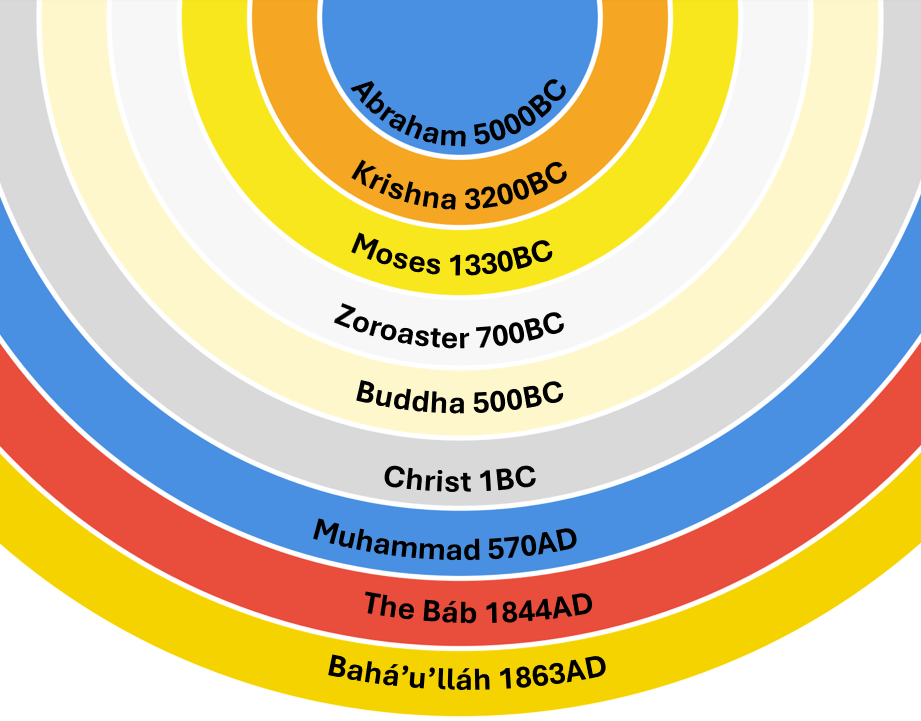
    Across the endless strata of human history — like layers of ancient sandstone telling the story of wind, water, and time — the divine has revealed itself again and again. In each epoch, in every age, a new Face of God emerged: a perfect reflection, suited for the time and place, guiding humanity’s spiritual evolution just as rivers carve canyons and tectonic forces raise mountains.

    Just as a geologist reads the hidden language of rocks and rivers, so too can we trace the universal patterns of divine revelation — patterns that whisper of an unbroken, living Presence moving through time.

    “The divine religions embody one truth. They are successive stages in the spiritual evolution of human society.”
    ‘Abdu’l-Bahá, The Promulgation of Universal Peace


    An artistic representation of Abraham, the patriarch whose covenant with God laid the foundation for major monotheistic religions.

    Abraham (~5000 BC)

    Abraham stands like an ancient mountain peak on the horizon of faith, weathered but enduring. His covenant with one unseen God birthed the great monotheistic traditions — Judaism, Christianity, and Islam — much like a single spring can give rise to mighty rivers that nourish distant lands.

    “Abraham… founded the foundation of reality. He laid the basis of a new civilization.”
    ‘Abdu’l-Bahá, Some Answered Questions

    His faith planted the seed that would grow into the towering forests of religious thought for millennia, showing that spiritual truth endures even as the sands of time shift around it.


    Krishna, depicted as a joyful and divine figure, symbolizes duty, devotion, and transcendent love along a picturesque riverside landscape.

    Krishna (~3200 BC)

    After Abraham’s time and further East, the joyous, mysterious figure of Krishna danced into human consciousness. In the luminous pages of the Bhagavad Gita, he speaks of duty, devotion, and transcendent love. His life is a river, winding and divine, reminding us that righteousness is not a heavy yoke but a flowing current we are invited to join.

    “The holy Manifestations have been the sources of the virtues and perfections of the world of humanity… They are the focal centers of the heavenly forces.”
    ‘Abdu’l-Bahá, Some Answered Questions


    Moses, the lawgiver, holding the sacred tablets that symbolize divine commandments and leadership.

    Moses (~1300 BC)

    On the craggy slopes of Sinai, amid thunder and flame, Moses brought down sacred laws — a crystallization of divine will, like minerals forming in the heart of the earth. His leadership shaped not only a nation but carved canyons into the human soul, channels through which justice and mercy could flow.

    “Moses was the founder of a new civilization, the organizer of a new law, the source of a new effulgence.”
    ‘Abdu’l-Bahá, Paris Talks


    Zoroaster, the ancient prophet of Persia, symbolizes the eternal struggle between good and evil, embodying the light within the cosmic battle.

    Zoroaster (~700 BC)

    In the arid lands of Persia, Zoroaster lit a flame that still burns. His revelation of the cosmic battle between light and darkness, good and evil, echoes the dualities woven into the fabric of nature — night and day, winter and spring.

    “Zoroaster… taught the oneness of God and the purity of life.”
    ‘Abdu’l-Bahá, Paris Talks


    A serene statue of Buddha, symbolizing enlightenment and spiritual guidance, surrounded by nature.

    Buddha (~500 BC)

    Under the sheltering branches of the Bodhi Tree, Siddhartha Gautama — the Buddha — became awakened. His Four Noble Truths are like compass points in a bewildering wilderness, guiding lost souls toward the sunrise of enlightenment.

    “Buddha also established a new religion and was the cause of the illumination of a nation.”
    ‘Abdu’l-Bahá, Some Answered Questions


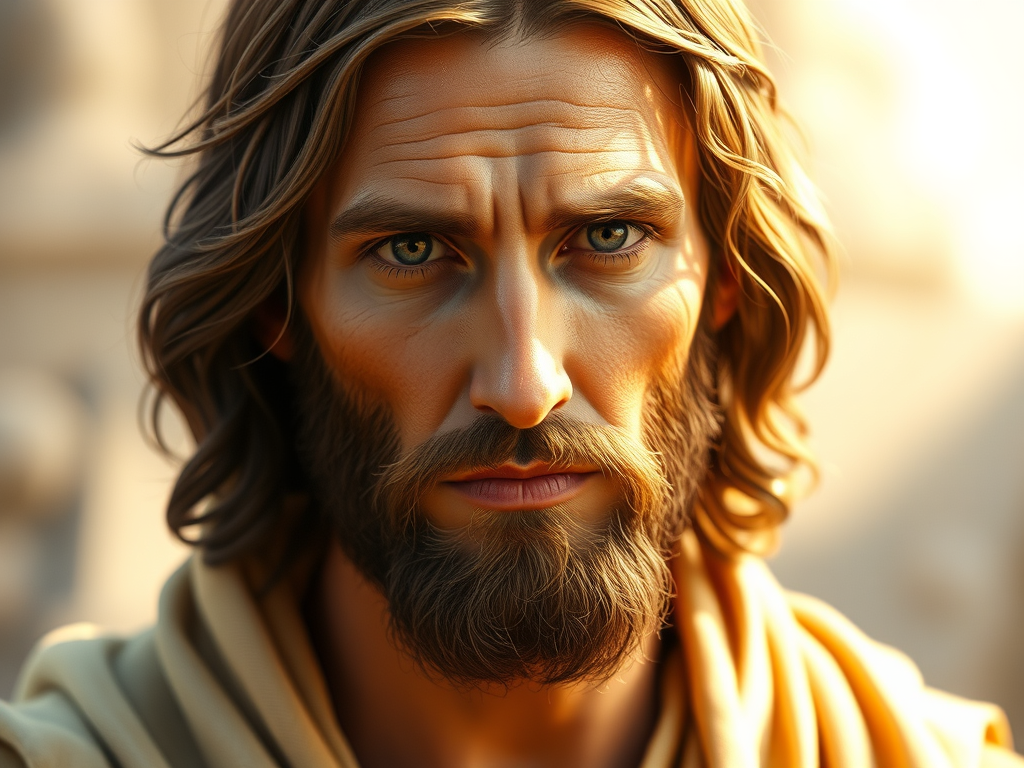
    A portrayal of Jesus Christ, embodying love, mercy, and forgiveness as central themes in his teachings.

    Christ (~1 BC)

    Then, into the shifting sands of Roman-occupied Judea, came Jesus Christ — love incarnate, a living wellspring in a thirsty land. His message shattered old stones of cruelty and offered instead a new bedrock: mercy, forgiveness, and selfless love.

    “The Sun of Reality shone forth from the phenomenal horizon of Christ… illuminating the realm of minds and hearts.”
    ‘Abdu’l-Bahá, The Promulgation of Universal Peace


    A silhouette of a figure in traditional attire, symbolizing the teachings of Muhammad and the call to submit to the will of God.

    Muhammad (~570 AD)

    In the Arabian desert, Muhammad’s voice rose like thunder over dunes, carrying the final, resonant call to submit to the will of God. The Quran, revealed through him, is a map across the endless sea of life, guiding seekers with stars of prayer, charity, and justice.

    “Muhammad appeared… His teachings were those of the unity of God, the establishment of brotherhood among mankind, the development of virtues…”
    ‘Abdu’l-Bahá, The Promulgation of Universal Peace


    The Báb, a pivotal figure in the Bahá’í faith, symbolizing the dawn of a new spiritual era.

    The Báb (1844 AD)

    The Báb, like the herald wind before a great storm, announced the dawn of a new era. His teachings cracked open the crust of old ways, preparing the ground for a greater revelation.

    “The Báb was the one who prepared the way for the coming of Bahá’u’lláh, the Promised One of all religions.”
    ‘Abdu’l-Bahá, Paris Talks


    A figure draped in a vibrant red garment, symbolizing Bahá’u’lláh’s declaration of unity and peace among all humanity.

    Bahá’u’lláh (1863 AD)

    And then, from the gardens of Baghdad to the shores of Acre, Bahá’u’lláh declared a vision as vast as the continents themselves: the oneness of humanity, the unity of all faiths, the promise of global peace.

    “The purpose underlying the revelation of every heavenly Book… hath been to endue all men with righteousness and understanding, so that peace and tranquility may be firmly established amongst them.”
    Bahá’u’lláh, Gleanings from the Writings of Bahá’u’lláh


    A Pattern Etched Across Time

    When I study the strata of the earth — folding, faulting, rising and falling — I see the same fingerprint left by the Divine in the spiritual history of humanity. Revelation, like the seasons, comes in cycles. Each Manifestation of God brings fresh rain to a thirsty world, shaping civilizations, cultures, and hearts the way rivers shape canyons and glaciers shape valleys.

    “Contemplate the past events of history and reflect upon their results… Thus may ye discover the truth of the statements made by Bahá’u’lláh.”
    ‘Abdu’l-Bahá, The Promulgation of Universal Peace

    Science and faith, geology and spirit — they are not opposed forces but harmonies of the same eternal song.

    We are the beneficiaries of a ceaseless, merciful unfolding — a revelation not once but always, not in one place but everywhere.

    The rocks cry out.
    The mountains testify.
    The winds carry the word.

    All creation echoes the call: there is more beyond what we see.

    And if we learn to read the signs — both in stone and in spirit — we will find the Divine, forever manifest, forever near.

  • From Strata to Self: A Geologist’s Journey Through Transformation


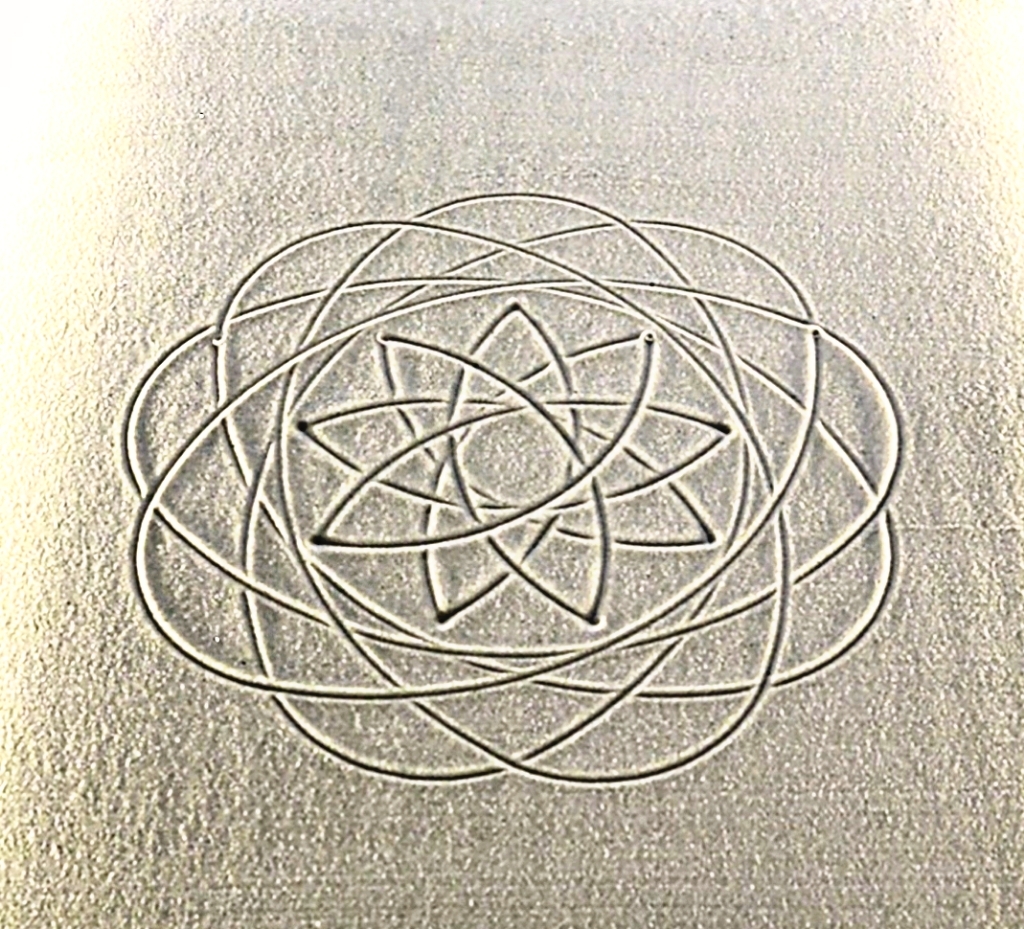
    Nine-pointed star and atomic orbital shells done in meditative sand art

    The Eternal Explorer: Unearthing Truths Within and Beyond

    Exploration is at the heart of everything I do. As a geologist, I’ve spent countless hours delving into Earth’s depths, searching for mineral treasures hidden in its layers. Yet, my most profound discovery has come not from uranium deposits, gold veins, or ancient rock formations but from within myself—a journey that began when I surrendered the reins of a self-driven life to a higher power. This pivotal change transformed not only my path but my perception of the world, allowing me to live in a new reality guided by inspiration and faith.

    The Baha’i teachings have illuminated this transformation for me. In the words of Abdu’l-Baha, “Religion and science are the two wings upon which man’s intelligence can soar into the heights, with which the human soul can progress.” Science without spirituality, or vice versa, can lead to imbalance; together, they create a harmony that has informed my journey both professionally and personally.


    Time as a Tapestry: A Cosmic Perspective

    Time has always fascinated me—not just as a geologist working with Earth’s immense timescales, but as an individual seeking spiritual truths. It begs the question: Is time linear, an immutable constant, or is it an experiential phenomenon that shifts with our awareness, much like tuning into frequencies on a cosmic radio? This idea—that our lived experience of time could be influenced by the channels we navigate, consciously or subconsciously—is as poetic as it is scientific. It ties together my passion for discovery with my spiritual faith, revealing a tapestry far richer than I ever imagined.

    The Baha’i writings resonate deeply with this idea of interconnected truths: “Science and religion must be in harmony.” In surrendering to my Higher Power, I’ve realized that time itself seems to have shifted—not in the external world, but within me. Living moment to moment, guided by inspiration and faith, has shown me that the present is where transformation truly occurs. What was once a race against time has become an intricate dance with it, every moment infused with purpose.


    Transformation Under Pressure: Lessons from Geology

    Geologists know that transformation takes time, pressure, and heat. Metamorphic rocks bear testament to this process—emerging renewed, transformed by their experiences in Earth’s depths. Similarly, my own metamorphosis came after years of self-driven living that led me to darker places. Five years ago, when I chose sobriety and surrendered my life to God, the Universe, my Higher Power—whatever name resonates most—I underwent a transformation every bit as dramatic as those rocks.

    This shift revealed a world that feels both new and familiar, as if seen through fresh eyes. The Baha’i scriptures capture this beautifully: “The reality of man is his thought… If a man’s thought is constantly aspiring towards heavenly subjects, he becomes holy; if on the contrary, it is directed to base desires, he becomes degraded.” Changing my thought patterns, surrendering to faith, and trusting inspiration have unearthed treasures within me I never knew existed.


    Trusting Inspiration: A Life Guided by Faith

    Professionally, my work as a geologist often requires trusting the process—digging deeper, following leads, and letting the Earth reveal its secrets in due time. This principle has mirrored my personal journey. Allowing inspiration to guide me moment by moment has taught me the value of surrender—not as a loss of control, but as an alignment with something greater.

    The Baha’i writings beautifully express this idea: “Let your thoughts dwell on the welfare of the world and the happiness of the nations… Strive that your actions day by day may be beautiful prayers.” By focusing on the present and trusting the flow of life, every action becomes a prayer, every discovery a revelation. This mindset has enriched both my work and my life in ways I could never have imagined.


    Living in a New World: The Explorer’s Revelation

    Surrendering to faith and embracing inspiration hasn’t just changed my life—it’s changed how I perceive the world itself. In allowing transformation to occur, I’ve found myself living in a completely new reality. It’s as if the layers of my old life have been stripped away, revealing a world brimming with possibility and beauty. This journey—guided by my belief in the harmony of science and spirituality—has been the greatest exploration of all.

    For me, exploration is more than uncovering minerals; it’s about uncovering truths, both earthly and eternal. This new world I inhabit reminds me every day of the interconnectedness of all things, and I embrace it with a spirit of gratitude and awe.


  • The Oneness of Faith: How Baha’u’llah Unites Humanity’s Spiritual Journey


    Contemplate with thine inward eye the chain of successive Revelations … I testify before God that each one of these Manifestations hath been sent down through the operation of the Divine Will and Purpose, that each hath been the bearer of a specific Message, that each hath been entrusted with a divinely-revealed Book and been commissioned to unravel the mysteries of a mighty Tablet. The measure of the Revelation with which every one of them hath been identified had been definitely fore-ordained.

    – Baha’u’llah, Gleanings from the Writings of Baha’u’llah

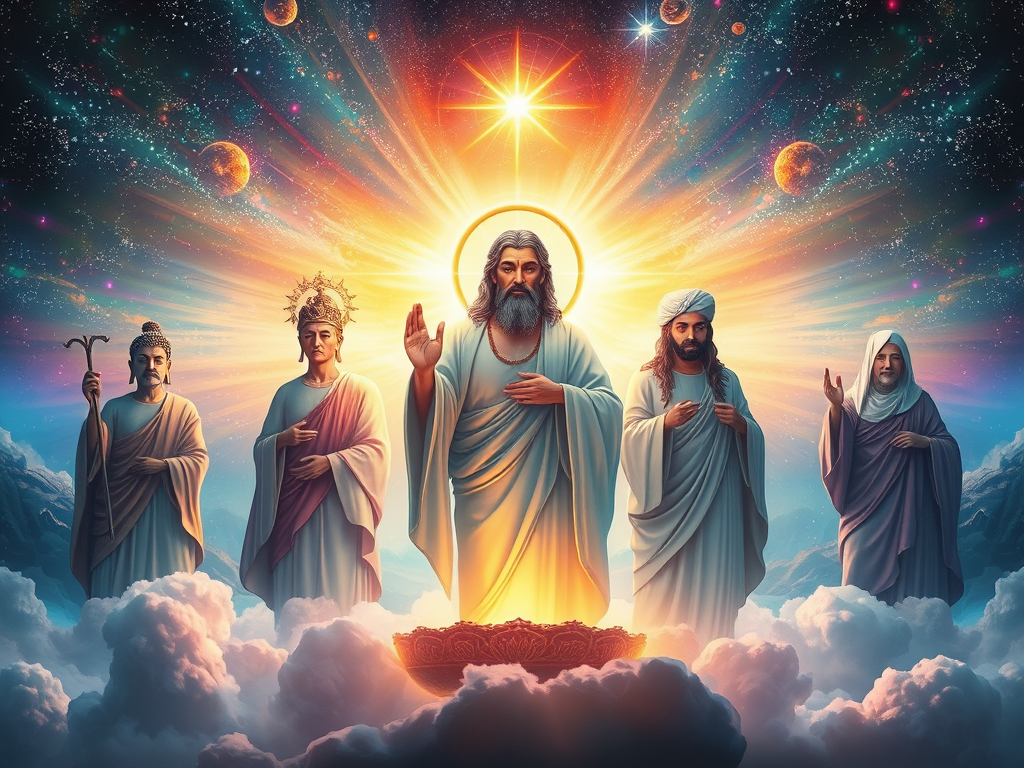
    The central idea behind the connection between all faiths—the thread that weaves together the spiritual heritage of humanity—is the concept of Progressive Revelation. This principle, foundational to the Bahá’í Faith, teaches that throughout history a single, eternal divine source has revealed itself through successive Manifestations, each bringing guidance tailored to the needs and capacities of the people of their time. In this view, the founders of major religious traditions—whether seen as Krishna, Zoroaster, Buddha, Abraham, Moses, Jesus, Muhammad, or others—are not independent or competing deities but rather successive heralds of the same divine message. Each messenger has revealed a part of a grand, evolving spiritual truth that speaks to the eternal nature of the human soul and its aspiration for unity, justice, and peace.

    Baha’u’llah is understood within this framework as the culmination of these divine revelations—a herald for our time and the long-awaited Promised One common to all religions. His teachings confirm that the divine message is not static; it unfolds gradually through the ages. What makes Baha’u’llah’s revelation so distinct is its explicit call for the unification of humanity. His writings emphasize the dissolution of the old barriers of race, nationality, and creed, and propose a new world order where the underlying spiritual unity of all people is recognized and celebrated. By affirming the truths found in earlier religions while addressing the modern challenges of our interconnected global society, Baha’u’llah offers a comprehensive vision that not only bridges diverse faith traditions but also provides a road map for social and spiritual renewal.


    The All-Knowing Physician hath His finger on the pulse of mankind. He perceiveth the disease, and prescribeth, in His unerring wisdom, the remedy.

    Bahá’u’lláh, Gleanings from the Writings of Bahá’u’lláh, p. 212


    This connection among the faiths is both historical and dynamic. Historically, the similarities in ethical teachings—such as the emphasis on love, compassion, justice, and service to humanity—suggest a common source, even if the external forms and cultural expressions differ. Dynamically, each successive revelation has built upon the foundation laid by the previous ones, with Baha’u’llah’s message emerging to meet the unique challenges and potentials of the modern era. In his revelation, all previous laws and ceremonies are not discarded but are seen as preparatory steps leading to a more comprehensive, all-embracing vision of human unity and progress.

    For those who seek not just intellectual understanding but a spiritual vision that integrates the wisdom of the past with the promise of the future, Baha’u’llah’s message offers profound insights. It invites us to view every faith as a vital chapter in a single, unfolding story—a story that is still being written. His call to see beyond superficial differences to the enduring, universal truths enables people from all walks of life to perceive themselves as part of one global family. This vision is not only a consoling truth but a practical guide for building societies grounded in justice, equality, and mutual respect.


    The best beloved of all things in My sight is Justice; turn not away therefrom if thou desirest Me, and neglect it not that I may confide in thee. By its aid thou shalt see with thine own eyes and not through the eyes of others, and shalt know of thine own knowledge and not through the knowledge of thy neighbor. Ponder this in thy heart; how it behooveth thee to be. Verily justice is My gift to thee and the sign of My loving-kindness. Set it then before thine eyes.

    Bahá’u’lláh, The Arabic Hidden Words 2


    In reflecting on the connection among all faiths and the role of Baha’u’llah as the promised one for our time, one is invited to contemplate both personal transformation and collective evolution. Whether one is exploring ancient spiritual texts or engaging with contemporary social challenges, the underlying message is clear: the divine is continuously reaching out to humankind, offering guidance that is both timeless and timely. By embracing this unity, we honor the legacy of all messengers and take an active part in creating a world reflective of the peace and oneness that their teachings inspire.

    Beyond these core ideas, there is much more to consider. For instance, one might explore how Baha’u’llah’s vision has inspired movements for social reform around the globe, or how his teachings interact with modern science and technology to offer solutions for the future. Each of these themes deepens the conversation and opens new pathways for understanding the intertwined evolution of faith and human society.

  • Rediscovering Our Souls: Mystical Truths from the Hidden Word – Baha’u’llah


    “O MY FRIENDS!

    Have ye forgotten that true and radiant morn, when in those hallowed and blessed surroundings ye were all gathered in My presence beneath the shade of the tree of life, which is planted in the all-glorious paradise? Awe-struck ye listened as I gave utterance to these three most holy words: O friends! Prefer not your will to Mine, never desire that which I have not desired for you, and approach Me not with lifeless hearts, defiled with worldly desires and cravings. Would ye but sanctify your souls, ye would at this present hour recall that place and those surroundings, and the truth of My utterance should be made evident unto all of you.


    The mystical language of Baha’u’llah’s Persian Hidden Word #19 transcends time and space, drawing readers into a sacred narrative that resonates deep within the soul. Its imagery is captivating: the “true and radiant morn,” the “shade of the tree of life,” and the “all-glorious paradise” where humanity was gathered in divine presence. These elements symbolize an intimate and eternal bond with our Creator—a union of profound love, purpose, and spiritual enlightenment.

    Mystical Truths

    Baha’u’llah’s words invite us to recall an existence beyond the confines of material life—a primordial connection to the divine that predates our earthly journey. This “radiant morn” alludes to the realm of pre-existence, where souls bask in God’s boundless grace and unity. The “tree of life,” a symbol evoking the idea of divine sustenance and eternal wisdom, provides shade and nourishment in this celestial gathering. It is more than a physical tree; it signifies the sheltering presence of God, the eternal source of truth and guidance.

    The utterance of the “three most holy words” reveals profound spiritual principles: submission to divine will, detachment from worldly desires, and purity of heart. These truths guide us toward sanctifying our souls, encouraging us to align our aspirations and actions with divine wisdom. Baha’u’llah emphasizes that earthly cravings and lifeless hearts hinder our spiritual progress—they cloud our ability to perceive the sacred realities embedded within our existence.

    The Sacred Place

    This “all-glorious paradise” is not merely a physical location but a spiritual state of being—a realm accessible through our communion with the divine. It is akin to the “garden of God” referenced throughout religious traditions, a space where the soul experiences unity, clarity, and serenity. Through spiritual evolution, believers can reclaim their connection to this sacred dimension, as it exists within the inner reality of every soul. It is our true home, the destination toward which all spiritual seekers are drawn.

    Evolving Spiritually: Sanctifying Our Souls

    Baha’u’llah’s call to “sanctify your souls” presents a roadmap for spiritual growth and transformation. Achieving such a state involves conscious effort and unwavering dedication to refining the self. Here are key steps toward sanctification:

    1. Submit to Divine Will: Cultivate humility and trust in God’s wisdom, relinquishing personal desires that may conflict with divine purpose.
    2. Purify the Heart: Engage in prayer, meditation, and reflection to cleanse the soul of negativity and worldly distractions.
    3. Detach from the Material: Practice detachment by recognizing the transient nature of earthly possessions and ambitions.
    4. Seek Unity with the Divine: Strengthen the connection with God through acts of service, fostering love and compassion for humanity.

    As we continue to evolve spiritually, we are reminded that our souls possess the innate ability to recall the sacred truth of our existence—the radiant morn, the hallowed surroundings, and the divine utterance. This journey is both a rediscovery of what has always been within us and a movement toward the ultimate realization of our spiritual potential.

    By embracing the timeless wisdom of Baha’u’llah, we awaken to the memory of our divine origin and purpose. In doing so, we find ourselves guided by the light of spiritual truths, ever drawn toward the “shade of the tree of life” in our own all-glorious paradise. Let us sanctify our souls and answer the divine call, for in this journey lies the fulfillment of our eternal destiny.

  • The “Gate” of Attainment – a refined ore and gem of truth!

    Selections from the Writings of the Báb – 3, Excerpts from the Persian Bayán

    Purification is regarded as the most acceptable means for attaining nearness unto God and as the most meritorious of all deeds. Thus purge thou thine ear that thou mayest hear no mention besides God, and purge thine eye that it behold naught except God, and thy conscience that it perceive naught other than God, and thy tongue that it proclaim nothing but God, and thy hand to write naught but the words of God, and thy knowledge that it comprehend naught except God, and thy heart that it entertain no wish save God, and in like manner purge all thine acts and thy pursuits that thou mayest be nurtured in the paradise of pure love, and perchance mayest attain the presence of Him Whom God shall make manifest, adorned with a purity which He highly cherisheth, and be sanctified from whosoever hath turned away from Him and doth not support Him. Thus shalt thou manifest a purity that shall profit thee.”

    – The Báb

    The quoted passage from the Báb speaks profoundly of purification as the pathway to nearness to God. This process of cleansing one’s senses, thoughts, and actions from distractions echoes the universal principle of refinement and focus, which is central both to spirituality and to the natural sciences, particularly geology.

    In geology, purification can be likened to the process of mineral refinement. Precious metals, such as gold, often begin their journey embedded within ore—mixed with impurities that obscure their true value. Through a series of meticulous processes, such as crushing, washing, and chemical treatments, these impurities are removed, revealing the pure metal within. This transformation mirrors the spiritual journey the Báb describes, where purification of one’s inner life enables the light of divine proximity to shine through.

    From a scientific perspective, the discipline required in the pursuit of knowledge also aligns with the call to purification. A geologist, for instance, must remove personal bias and distractions to analyze data objectively. This intellectual “cleansing” allows for clarity and truth to emerge, much like the refinement of minerals or the spiritual process of turning one’s heart and actions toward God.

    On a personal level, we can see purification as a deliberate act of alignment—choosing to remove habits, influences, or pursuits that detract from one’s higher goals. Whether it is the pursuit of spiritual enlightenment, scientific discovery, or even professional and creative excellence, this process demands introspection, discipline, and commitment.

    For myself, this concept resonates deeply not only in my geologic work—where I separate valuable insights from noise—but also in my personal reflections and writings. Just as ore is purified to reveal the treasure within, the act of purification in thought and deed polishes one’s character, enabling a more profound contribution to the world around us.

    What do you think about this connection between spiritual principles and geological processes? It feels like such a natural blend of my passions.

  • Naw Ruz 182 B.E.: A Time to Transform, Like the Earth Itself

    The arrival of Naw Ruz, the Baha’i New Year, brings with it a sense of renewal and reflection. Celebrated on the spring equinox, it marks not just a new calendar year but also a celestial alignment that reminds us of the intricate tapestry of time. As both a Baha’i and a geologist, I find a special resonance in this occasion—an opportunity to consider the dual realms of faith and the physical world.

    In the Baha’i teachings, Naw Ruz is a time to let go of what has outlived its purpose and to welcome the fresh possibilities that lie ahead. Similarly, in geology, the Earth itself embodies this process of constant renewal. Mountains rise and erode, minerals form and transform, and the tectonic plates shift and create new landscapes. Each moment in Earth’s timeline is a testament to the inevitability of change and the beauty that emerges from it.

    As we step into 182 B.E., we are reminded that every year carries with it the potential for expansion—of our horizons, our understanding, and our connections. But this growth often requires us to release the baggage of habits, fears, and attachments that no longer serve us. Just as the Earth’s surface is reshaped by the forces of erosion and uplift, we too must allow the currents of life to remold us.

    This Naw Ruz, I invite you to think about the layers of your own existence. What sediments of the past have hardened into unnecessary weight? What dormant potential lies waiting to be unearthed? Like a geologist examining a core sample, we can look into the strata of our lives and identify both the burdens to release and the treasures to embrace.

    And let us not forget the daily opportunities for transformation. Every sunrise offers the chance to refine our character, to turn challenges into learning experiences, and to contribute meaningfully to the world around us. Just as the Earth continuously evolves—building mountains, carving canyons, and fostering life—so too are we given the sacred gift of each moment to reshape and renew ourselves.

    As we move forward into this new year, let us carry with us the wisdom of both faith and geology: that change is a natural and beautiful process, and that each moment holds the potential for growth. Happy Naw Ruz to all who celebrate. May this year be one of discovery, renewal, and the courage to embrace both the known and the unknown.

  • You Are What You Think

    The idea that “you are what you think” may seem abstract at first, but it’s an observation I have repeatedly encountered, not only in my personal experiences but also in the dynamic patterns of the natural world. Just as the earth’s geological processes shape the terrain we see today, our thoughts—silent and unseen—shape the world we create for ourselves.

    As a geologist, I’ve spent countless hours in the field, surrounded by rugged mountains, ancient riverbeds, and shifting sands. These landscapes are testimonies to transformation—millions of years of erosion, deposition, and tectonic uplift. Much like the natural forces that carve valleys or build mountains, our inner thoughts and beliefs set processes in motion that sculpt the contours of our lives.

    Thoughts as the Foundation of Action

    In geology, the bedrock represents the foundation upon which everything else is built. Similarly, our thoughts form the bedrock of our actions. For example, when I step onto a new exploration site, the way I approach that landscape—whether with curiosity, skepticism, or optimism—directly impacts my findings. If I expect to discover nothing of value, my observations might become clouded, and I might miss signs pointing to mineral deposits. Conversely, an open and eager mindset often uncovers opportunities I might not have seen otherwise.

    This principle translates into everyday interactions. Imagine how our attitude, shaped by our internal dialogue, affects our communication with others. A small moment of self-doubt, left unchecked, might lead to hesitation or insecurity in speech. On the other hand, a simple affirmation—”I have something valuable to contribute”—can transform not just how we express ourselves but how others respond to us.

    Words: The Agents of Change

    If thoughts are the bedrock, words are akin to water in the geologic process. Water, though seemingly soft and fluid, has the power to erode mountains and carve vast canyons. Our words hold similar transformative energy. Speaking with kindness and authenticity has an unseen ripple effect. A casual compliment or word of encouragement can uplift a colleague, a friend, or even a stranger in ways we may never fully grasp.

    I often reflect on the conversations I’ve had with industry peers—discussions about diversity initiatives or sustainable mining practices, for instance. When I speak from a place of genuine conviction, others often feel inspired to take action. The simple act of voicing a thought carries a force akin to a flowing river, reshaping landscapes bit by bit.

    Actions: The Visible Record

    In geology, formations like stratified rock layers provide a visible record of past events. Similarly, our actions are the tangible outcomes of our inner workings. Just as the earth’s surface reveals its history through fossils and fault lines, our behavior reflects the collective influence of our thoughts and words.

    For me, this connection becomes clear in my efforts to promote diversity within the mining and exploration sector. The belief that inclusivity drives innovation led me to take action—whether it’s writing a blog post on the subject or celebrating women’s achievements in the field on International Women’s Day. These actions, though seemingly small, contribute to a broader, visible shift in the industry, much like sediments that accumulate to form new layers over time.

    The Unseen Magic

    Nature offers a profound metaphor for this “unseen magic.” While we often focus on what’s visible—the majesty of a mountain or the brilliance of a mineral vein—it’s the invisible processes beneath the surface that bring these wonders to life. Likewise, the energy of our thoughts, words, and actions works quietly yet powerfully to shape our reality.

    In recognizing this, we have the ability to become intentional architects of our lives. By cultivating positive thoughts, speaking with purpose, and acting with integrity, we harness the transformative forces that define who we are and how we interact with the world.

    So, as I reflect on the landscapes I’ve encountered and the lessons they’ve taught me, I leave you with this: What kind of world are you shaping with your thoughts today? Just as the earth’s processes require patience and persistence, so too does the practice of mindful thinking. But over time, the results can be extraordinary—a life built with intention and purpose, as steadfast and inspiring as the mountains themselves.