“Knowledge is as wings to man’s life, and a ladder for his ascent… a source of glory, of bounty, of joy, of exaltation, of cheer and gladness unto him.”
— Bahá’u’lláh, Tablets of Bahá’u’lláh, Tajallíyát
In the dry heat of the field, standing amidst outcrops that whisper of eons past, I often find myself lost in a silent reverie—not just of fault lines and formations, but of something far more subtle. Something sacred.
There is a reverence in geology. Not the kind that recites rites, but one that bows its head before deep time, the choreography of atoms, and the hidden logic of creation. To read the Earth is to trace the fingerprints of the Divine across basalt, breccia, and banded iron.
Stone Tablets and Sacred Texts
In the Tablets of Bahá’u’lláh, the Manifestation of God writes that “knowledge is as wings to man’s life, and a ladder for his ascent.” As geologists, we climb such ladders. Each stratigraphic column we read is a rung toward understanding—of not only Earth’s form but our own formation.
Bahá’u’lláh cautions us to pursue sciences that “can profit the peoples of the earth”—a sober reminder in an age of data deluge and echo chambers. In geology, this charge is vividly practical: mapping groundwater for villages, identifying minerals for renewable energy, or understanding seismic risk zones to save lives. We aren’t chasing knowledge that begins and ends in words. We’re pursuing truths etched in granite and sandstone, truths that weather storms and still sing.
Hearing the Earth Speak
To have “a hearing ear,” as Bahá’u’lláh puts it, is more than listening with our intellect. It’s an attunement. A way of perceiving that blends discipline with wonder. It’s being open to both the measured hum of the magnetometer and the quiet awe of watching starlight bounce off a trilobite fossil.
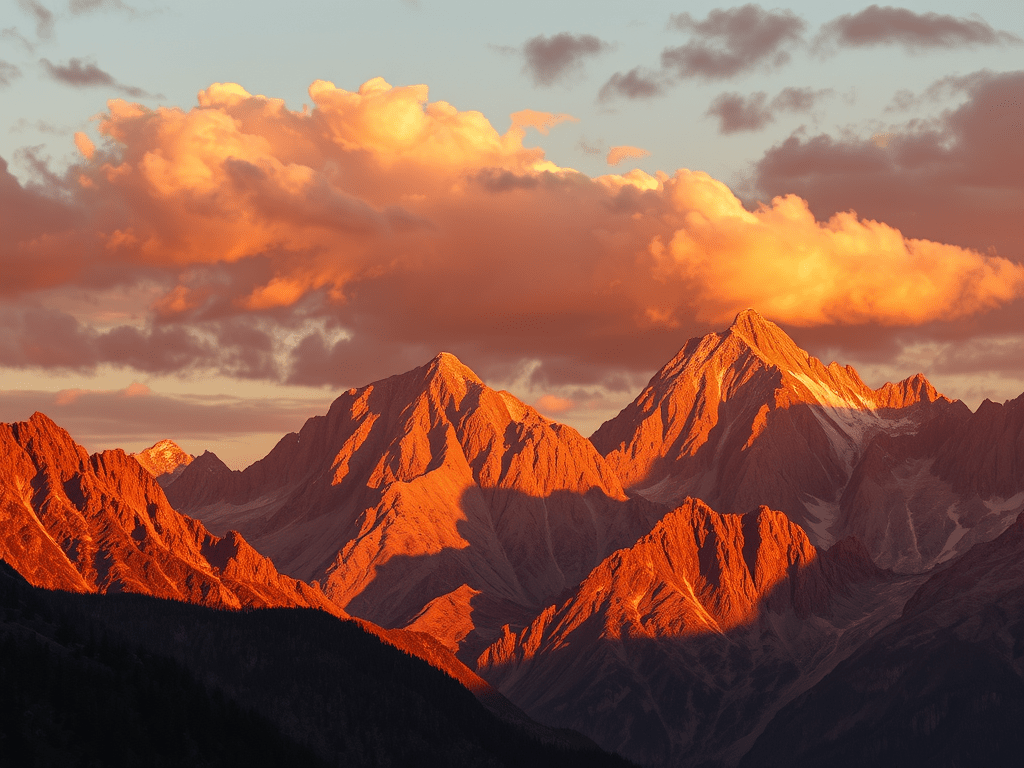
I once sat beside a fault scarp in Nevada, sipping coffee after a long mapping day. The sun dipped low, and the Earth glowed—not just with photons, but with meaning. Not a single word was spoken, yet everything was being said. That moment wasn’t just geological. It was devotional.
The Treasure Beneath Our Feet
Bahá’u’lláh calls knowledge “a veritable treasure” and “a source of joy.” For those of us in the sciences, joy isn’t just a bonus—it’s a compass. The giddy thrill of discovery, the satisfaction of fitting a puzzle piece into the great geodynamic picture, the moment a hand lens reveals what the naked eye missed. That joy is sacred. It lifts us.
In that light, a geologist’s pick becomes a pilgrim’s staff. A map is not just a tool, but scripture of the Earth’s unfolding. And every field day—long, dusty, uncertain—is a sacred trek toward truth.
Ascent Through Understanding
So let us climb—not away from the world, but deeper into it. Let us be scientists who build ladders for others to ascend: through knowledge that heals, informs, and uplifts. Let our understanding of plate tectonics, ore genesis, and petrology also make us better stewards, better neighbors, better souls.
After all, we are not just studying rocks. We are studying the voice of the Earth, and through it, perhaps, catching echoes of the Creator.
 the musing geologist
Leave a comment